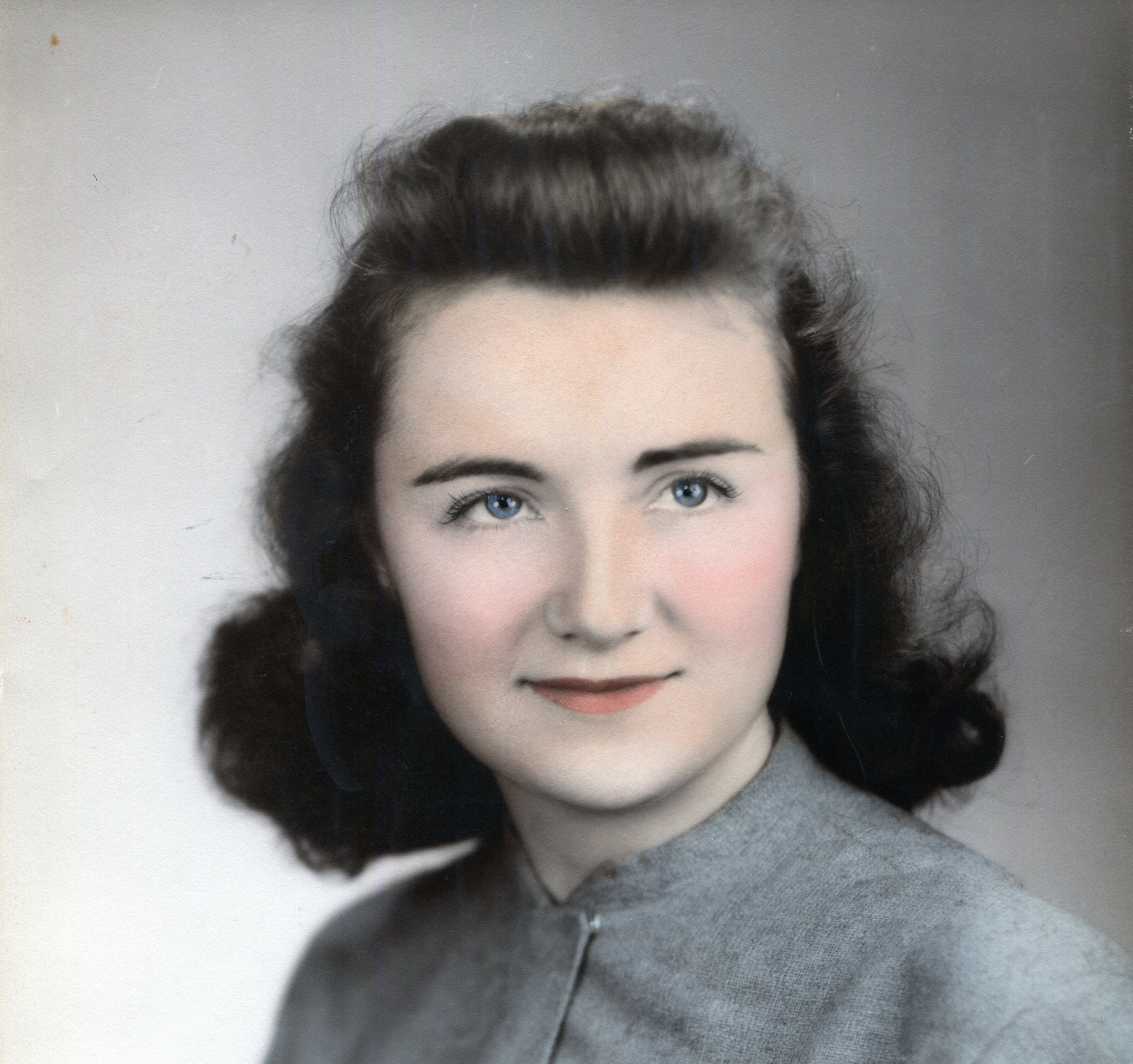
We next moved to Richmond Heights and Little Flower Parish. Richmond Heights in the 1930’s was a newly building area with half empty lots , single family homes, and an equal number of family rental units called flats. We lived on the second floor of a two-family flat on Lile Avenue between Boland Place and Moorlands Drive. It was on a small hill and during winter snows it was blocked off so that the children of the neighborhood could sled. Imagine sledding on snow just outside your home! It was in an area with a lot of exciting empty lots. The hall made a great play tool… close all seven doors and you were in a an elevator, a playhouse, etc. etc. The screened back porch was our summer retreat. Mom and I sewed doll clothes, the trapeze was there to swing on and there was a cot for sleeping.

I attended kindergarten at Little Flower Catholic School which was named after St. Teresa known in history as the Little Flower of Jesus. We walked to and from school and even came home for lunch. On cold days, we were regular Campbell Soup Kids! From our home our school was one-half block up Lile Avenue and one-half block across Boland Place. The public school was one and one-half blocks further on Boland, just past the drugstore where candy was sold and yoyo contests were held. The Negro school was about three blocks further down. All Richmond Heights Negroes lived in a shanty town about four by four blocks in area. In St. Louis in the thirties there was no playing together nor mixing of races.
Our school grounds had a small building which had been the first church. It was then used as an auditorium and years later torn down to make room for the present large church building. When I went to Little Flower School there was a two-story brick building , partly below ground. The lower floor had the church and the kindergarten and the first/second grade rooms. The nuns lived on the left side upstairs and classrooms of combined grades third/fourth, fifth/sixth, and seventh/eighth ran the length of the central hallway. Before I graduated from the eighth grade, a third floor was added with an auditorium/drama theater and more classrooms.

All third graders were terrified because fourth grade meant we would have that tall, strict, Sister Mark. She was a tough, no-nonsense, but wonderful teacher. I went to school on day 1… took one look at Sr. Mark… and was bedridden for a month. I must admit this was because of a case of pneumonia prior to the discovery of sulfa drugs. Another teacher whom I admired very much was Sr. Matthew, my seventh grade teacher. She and I kept up a Christmas card friendship for years until her death.
These were nuns of the Dominican order. They wore white habits. We wore uniforms of brown pleated skirts with beige long-sleeved blouses. Our claim to individuality was the use of very colorful handkerchiefs which were worn in the left side blouse pocket.
Each year our school produced a musical play. My brother Richard always had a leading role. One play was a version of Cinderella. I was chosen for the solo singing part of Cupid. I must have been young because I would not have had the courage to sing before a large adult audience if I had reached the “age of reason.” I have a snapshot which pictures me in a tutu and holding a bow and arrow. I remember the ending of the song , when I move down center stage, knelt dramatically on one knee and pointed the bow and arrow at the audience and sang “I’ll make a better man of you!” I even had Shirley Temple’s blonde hair but alas, not her talent.
I also remember a class play about George Washington. I had the part of Martha Washington. Among my memorabilia is a picture of me in a long dress and a gray wig. Alas, I never got to play the part on stage. Three days before “break-a-leg” time I came down with the measles! I never did like the girl who filled in for my part.
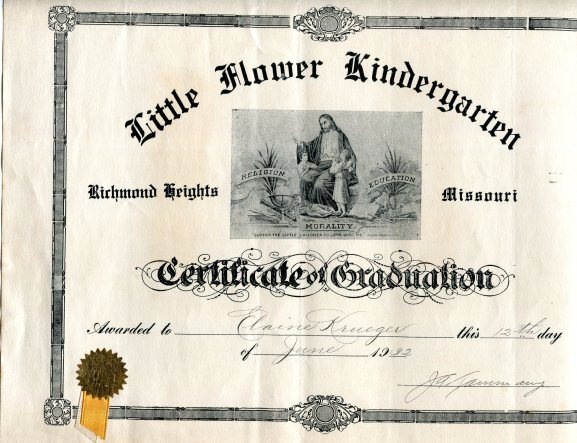
My brother Richard and I both graduated from Little Flower School with honors.
[Editor’s note: even though Elaine spells the street she grew up on “Lyle,” I have changed it to Lile because although there is a Lyle Avenue near Richmond Heights, the street she describes as two blocks from school is Lile Avenue. Their address is also listed as “Lile” in the 1940 census.]
Some of my playmates and antics:
JoAnn and Arthur (aged 4&5). I taught them how to build a fire and almost burned down the wooden porch of my Aunt Sylvia and Uncle Wally Martin’s brick house.
The Lile Avenue Gang: Helen Liebe – a redhead whom I played with because she had the best toys and, being an only child, she had a room of her own. One of my greatest desires was to have a room of my own.
Dolores and Eileen Costello: (they each had a bedroom of their own!) We spent many hours playing board games such as Monopoly. A good game of Monopoly might last four days with time out for dinner and sleeping.
Charlene Miller’s house was near the lamp post and the permanent spot to play kick the can ( a hide and seek game usually played at dusk.)
Waddy DeBolt: His garage was the site for our “Saturday Night Live” style plays and comedies. It was also the spot where we learned to play Spin the Bottle, a kissing game.
Marianne and Jackie Borgman: Jackie was my valentine sweetheart and my boyfriend during 7th and 8th grad
Fern Dorlac: lived next door. She was the girl who developed early. At the movies Fern always had to prove she wasn’t twelve years old. Children under 12 years paid 10¢ and adults 25¢ for the movie.
Saturday Nights After dinner on Saturday nights, Mother, Daddy, brother Richard and I would get into the Plymouth car and head across Forest Park to the Stephenson’s house. The Stephenson’s, our only St. Louis relatives, were Adelaide, my mother’s younger sister, her husband Roger, and their three children.
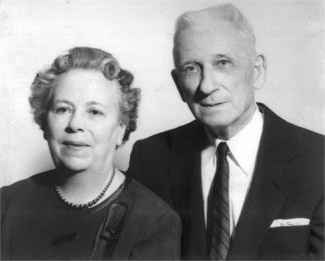
Shirley was near my brother in age while Mary Pat and Roger, Jr. were three and four years older than Shirley. Roger, Jr. was quiet, artistic and always at odds with his father. He married four times and made a million dollars, lost a million, and made a million. Mary Pat was the wild one. She went steady at thirteen but always told her parents she was at a girlfriends’ house. She married two times and had a girl Miss Priss. Shirley Jeanne buried two husbands. The first was Dudley Leetun, the father of Linda and Barbara. Then she married Vic Anderson, helped raise his three teenage sons and then had “their” son.
Back to those Saturday nights…..Shirley and Richard were not too thrilled having little ME around. They’d close the girls’ back bedroom door and I’d go running to the adults to say “Richard and Shirley are in the bedroom with the door closed.” I knew that always created a stir and someone would head back down the hall to check and tell them to KEEP the door open. At their house they had a lawyer’s bookcase filled with National Geographic magazines. I enjoyed looking at these magazines and not just for the bare breasted natives! The Ouija board was a popular activity. It would sit atop a table, the room lights would be dimmed, hands would be placed on the board and if we all concentrated the board would move and tell our fortunes.
Uncle Roger was a strange man. How my aunt ever lived over 50 years with him I’ll never understand. He had been an ambulance chaser attorney, a so-so realtor and then spent the last 30 years lying on the couch while Adelaide waited on him. She’d fix him dinner – that he wouldn’t eat. He always wanted his dessert first. He loved to argue Religion with my mother. He was an Englishman, so I guess he disliked the Roman Catholic Pope. He hated Democrats, especially FDR; he would never accept a Roosevelt dime. In later years if we were leaving St. Louis to return to L.A. by plane, he would remind us in lurid detail of all plane crashes ever.
Now Aunt Adelaide was the reason we went to the Stephenson’s every Saturday night. What a brilliant woman. What a comfortable person to be around. She was a Christian Scientist practitioner and the main source of income for the family. She was a heavyset woman and her untimely death was caused by diabetes, which could have been controlled by medication but she would not go to an M.D. because of her religious beliefs. What a waste of a wonderful lady. She was my mother’s younger sister and they talked to each other daily by phone. I had the pleasure of having her visit us in L. A. It was to see Ruth, her sister, after Mother’s stroke and move to O’Neill’s Convalescent Home in Santa Monica. Ad visited my Dad in St. Louis until his death, then helped Richard with the rental of the folk’s house, until he sold it when we realized Mother would never return to it.
Sunday Afternoons
Sunday afternoon was my Dad’s to plan. It usually meant a drive in our Plymouth automobile and often a picnic. Sometimes we’d go to swim at a mineral springs pool. A most favorite spot for picnicking was a place called by us “Handlebars”… because as you might have guessed the man you paid 50 cents for entrance had a magnificent handlebar mustache. We had many happy picnics there. He only allowed five or six families into his grounds. I remember picnic tables under the leafy trees., a field for baseball or badminton; and a stream running gently alongside the small but steep hill which we’d climb and discover the wonders of nature. Years later when my fiance, Michael, came along on a Sunday picnic we discovered a wonderful fallen log to sit upon and smooch! Today “Handlebars” is paved over with the homes of St. Louis suburbia.

Some summer Sunday afternoons when the Cardinal baseball team was in town, Daddy would drop Mother, Richard and me at a movie and he’d head for the game. He liked to sit in the bleachers. When the movie let out we’d have to wait to be picked up. If the game went into extra innings we’d wait and wait and wait.
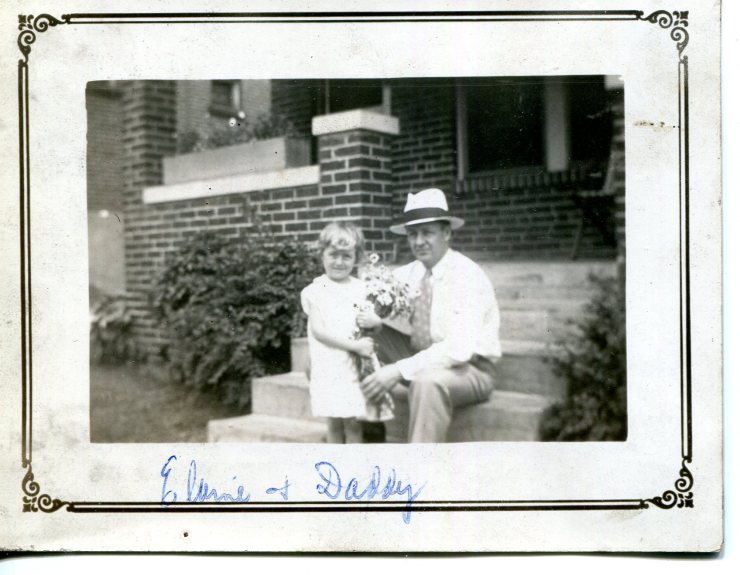
On Sundays my Dad would usually cook. His chili is memorable. Chicken on Sunday was a special treat in the 30’s. Daddy would let me go with him to the poultry shop. The chickens were live in cages. The customer would choose a bird and then the butcher would carry it by the feet, head down and squawking loudly to the rear of his shop. I did not realize the squawking ceased when he wrung the chicken’s neck and dunked the bird in water to pluck off his feathers.
Wintertime
Our street was a sloping hill and just one block long. In the winter the city would block off some streets to through traffic. Ours was one of the lucky streets. We could sled down the snowy incline. It was so much fun. The “big boys” would start running with their sleds in their hands and then jump on in prone position head first. They seemed to fly downhill. Dear God, don’t let them goof and hit a tree, we’d pray. Sometimes Daddy or a kind person would give us young children a sitting up ride part way down the hill or even a “pull back up to the top” ride.
Another activity was the collection of used Christmas trees onto a vacant lot. Then the neighbors would gather together for a ‘big bonfire’.
Christmas
We never saw our Christmas tree until after 6AM Mass on Christmas Day. Then it stayed up until “Epiphany or little Christmas,” the day of the wise men’s visit to Jesus. Sometimes it would snow while we were at Christmas Mass. What a beautiful sight as we left the church for home.
When I was young and my grand mother Krueger (Mama Minnie) was alive, we would spend Christmas at her house. It was about 150 miles to Nauvoo Illinois, a former Mormon town on the Mississippi River. The last few miles by car were along the very edge of the river. It was usually cold and icy weather. My Dad would tease my mother and me by saying “hold on, I think the car is sliding.” I would be so afraid. What if we slid into the Mississippi? I couldn’t swim and the Christmas presents would get wet.
When we left town to visit my aunts on the farms, driving could be very complicated. There were just two tracks about six inches deep on the frozen, snowy road. If another car appeared, one of the drivers would have to back up to the intersection to let it pass!
 Elaine's Memoirs